

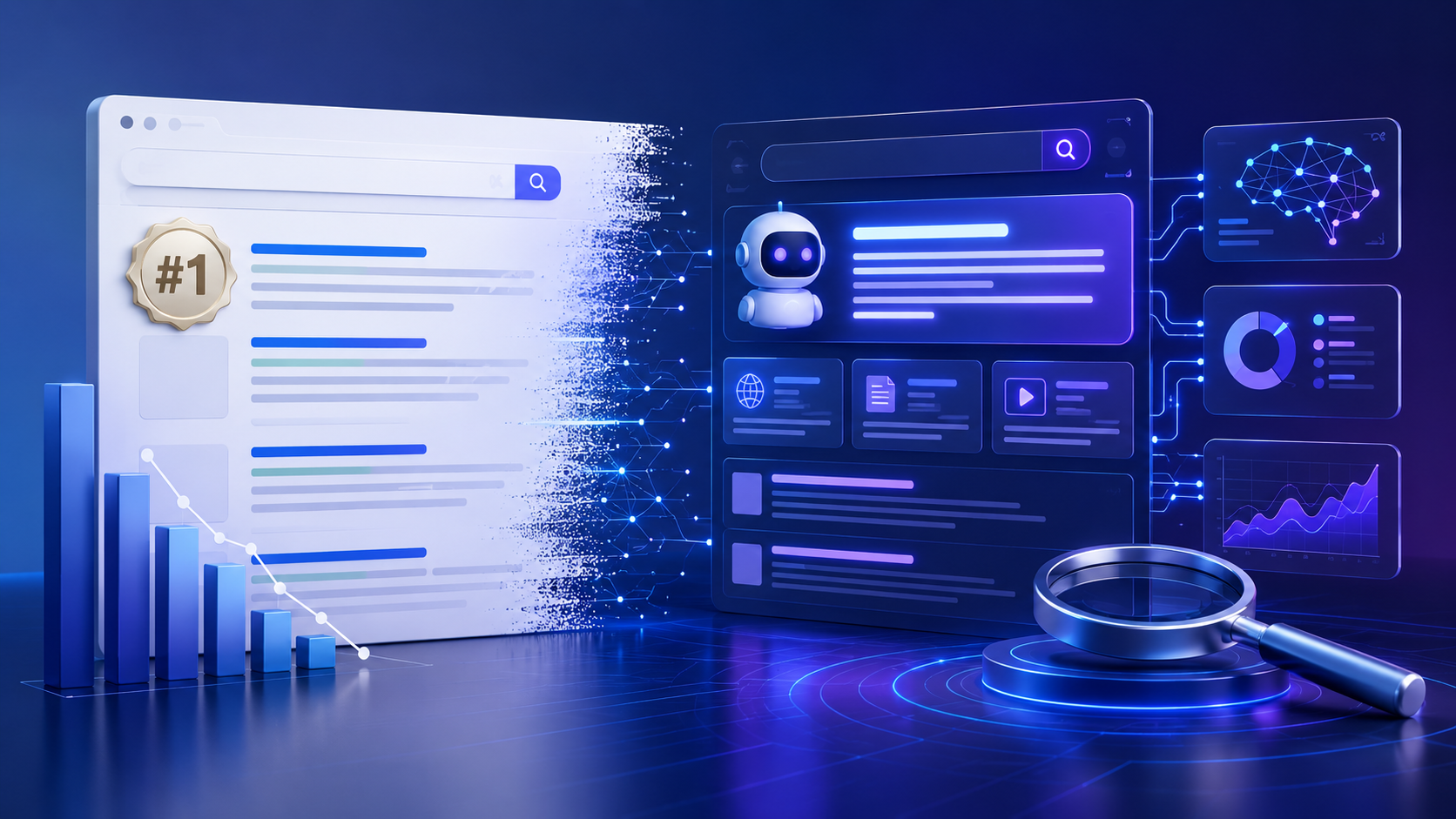
Will AI Search Make the #1 Ranking Less Valuable?
For many years, achieving the #1 position on Google has been one of the biggest goals in SEO. Businesses invested heavily in keyword research, content optimization, technical SEO, backlinks, and other strategies to reach the top of search results. But the way people search for information is changing rapidly.
With the growth of AI Search, users can increasingly get direct answers without clicking through several traditional search results. AI-powered search experiences can summarize information from multiple sources and present an answer within the search interface.
The short answer is that the #1 ranking is still important, but its role is changing. Ranking first on Google can continue to generate visibility, traffic, and credibility. However, businesses now need to think beyond traditional rankings and focus on being visible, useful, and trusted across AI-generated search experiences.
What Is AI Search?
AI Search refers to search experiences that use artificial intelligence to understand queries, interpret context, and provide more direct answers.
Traditional search engines generally display a list of links based on relevance and other ranking signals. Users then visit websites to find the information they need.
AI-powered search can work differently. Instead of simply displaying links, an AI system may:
- Understand the meaning behind a complex query
- Combine information from multiple sources
- Generate a conversational answer
- Provide supporting sources or links
- Suggest related questions
- Help users compare different options
This changes the relationship between search rankings and website traffic.
A website may rank highly for a keyword but still receive fewer clicks if users find enough information directly within an AI-generated response.
Why the #1 Ranking Has Always Been Valuable
The top organic position has traditionally received a significant amount of attention because users often trust and click the first relevant result.
A #1 ranking can provide several benefits:
Higher Visibility
Being at the top of search results puts your brand in front of people actively searching for products, services, or information related to your business.
More Organic Traffic
Higher rankings generally have the potential to attract more clicks than lower-ranking pages, especially for competitive commercial keywords.
Stronger Brand Credibility
Users may perceive businesses that consistently appear near the top of search results as more established or authoritative.
Better Business Opportunities
For commercial searches, strong organic visibility can contribute to leads, enquiries, purchases, and other conversions.
Because of these advantages, traditional rankings should not be ignored. The important change is that ranking position is no longer the only measure of search visibility.
How AI Search Could Change the Value of Position #1
AI Search introduces a different way of presenting information.
Imagine someone searches:
"What are the best SEO strategies for a small business?"
Instead of displaying ten blue links and asking the user to visit each website, an AI-powered search experience may provide a summary covering technical SEO, local SEO, content, backlinks, and measurement.
If the user's question is answered directly, they may not need to click the first traditional result.
This means a website could rank #1 and still face competition from AI-generated answers.
However, this does not mean the #1 position becomes useless.
The more accurate way to look at it is:
The #1 ranking is becoming one part of search visibility rather than the complete definition of search success.
Rankings vs AI Search Visibility
Traditional SEO often focuses on metrics such as:
- Keyword rankings
- Organic traffic
- Click-through rate
- Impressions
- Backlinks
- Conversions
AI Search adds another layer to this measurement.
Businesses may also need to consider:
- Whether their brand is mentioned in AI-generated answers
- Whether their website is used as a supporting source
- How often their content is cited
- Whether AI systems recognize their topical authority
- How consistently their brand appears for relevant questions
This creates a broader concept of search visibility.
Instead of asking only, "Are we ranking #1?", businesses should also ask:
"Is our brand being recognized when users ask important questions about our industry?"
How Businesses Can Prepare for AI Search
Businesses don't necessarily need a completely separate SEO strategy for AI Search. Many fundamental SEO practices remain relevant.
1. Build Strong Topic Coverage
Cover important topics related to your products, services, and industry. Develop content that answers both broad and specific questions.
2. Understand Search Intent
A keyword can represent different user needs. Understand whether users are looking for information, comparisons, services, products, or solutions.
3. Answer Questions Clearly
Structure content so important questions are answered directly. Clear headings, concise explanations, lists, tables, and FAQs can make information easier to understand.
4. Strengthen Brand Authority
A recognizable and trustworthy brand can have advantages across search environments. Maintain consistent business information and build genuine online authority.
5. Use Internal Linking
Connect related pages logically. Internal links help users navigate your website and help search engines understand relationships between topics.
6. Maintain Technical SEO
Make sure your website can be crawled and understood effectively. Page performance, mobile usability, indexing, structured data, and site architecture remain important areas of SEO.
7. Create Original Information
Generic content can be easily replicated. Original research, expert opinions, case studies, examples, statistics, and firsthand insights can provide additional value.
8. Track More Than Rankings
Monitor organic traffic, conversions, branded searches, SERP features, engagement, and other visibility indicators alongside keyword rankings.
The Future of SEO Is Bigger Than Position #1
The evolution of search does not mean traditional SEO is disappearing.
Instead, SEO is becoming broader.
Search engines and AI systems are increasingly focused on understanding entities, context, relationships, intent, and trustworthy information. Businesses that continue to focus only on individual keyword rankings may miss these changes.
The goal should be to build a website that search engines and AI systems can understand while also providing genuine value to users.
For Vijay SEO, this means looking at SEO as more than a race for the first position. A successful strategy should combine strong technical foundations, relevant content, authority, brand visibility, and an understanding of how users search.
It may reduce the importance of the traditional #1 position as the single most important SEO success metric, particularly when AI-generated answers satisfy users without requiring a click.
But ranking #1 is far from irrelevant.
High organic rankings can still provide visibility, traffic, credibility, and business value. The key change is that SEO success now needs to be measured across a wider search landscape.
Businesses should aim not only to rank first, but also to become a trusted source that search engines and AI-powered search experiences can recognize and reference.
The future of SEO is not simply about being first on the results page. It is about being visible wherever your audience is searching for answers.
Frequently Asked Questions :
No. Traditional organic rankings remain an important part of search. AI Search is adding new ways for users to find and consume information.
Yes. Ranking #1 can still generate strong visibility, organic traffic, and credibility. However, it should not be the only SEO KPI.
AI-generated answers can provide information directly within the search experience, which may reduce clicks for some informational queries.
AI Search visibility refers to how often a brand or website appears, is mentioned, or is referenced within AI-powered search results and generated answers.
Businesses should focus on high-quality content, topical authority, search intent, technical SEO, original information, strong brand signals, and clear website structure.