

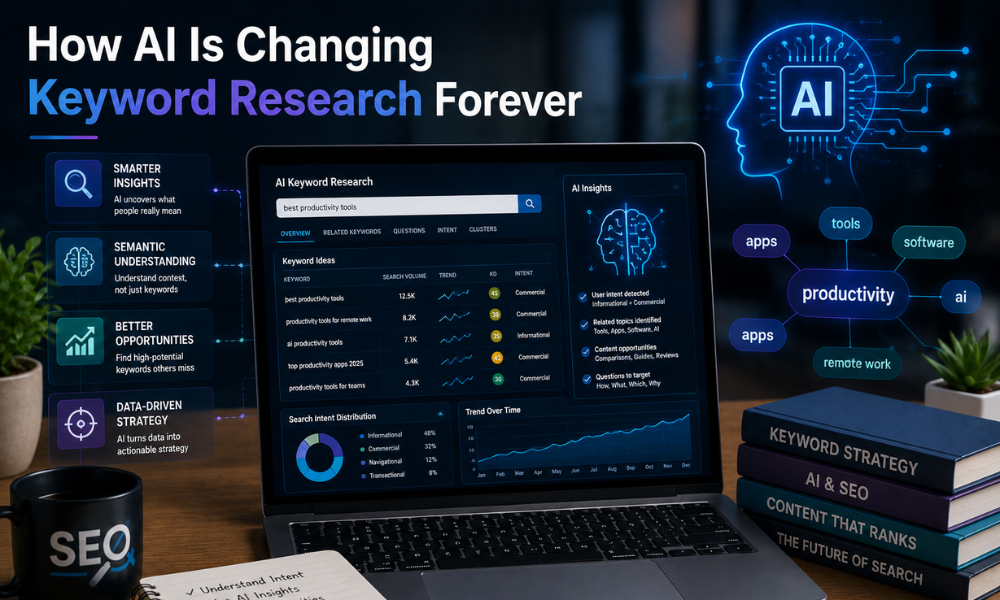
How AI Is Changing Keyword Research Forever
Keyword research used to be simple: find high-volume terms, check competition, and build content around them. AI has changed that process at every level — from how people search, to how search engines interpret queries, to the tools marketers use to find opportunities.
This guide explains how AI is reshaping keyword research and what businesses need to do differently in 2026.
The Old Way of Keyword Research
Traditional keyword research focused heavily on:
- Search volume and keyword difficulty scores
- Short, specific keyword phrases ("best running shoes")
- Exact-match targeting for ranking purposes
- Competitor keyword gap analysis
- Separate keywords for separate pages
This approach worked well when search engines matched queries to content largely through literal keyword matching. That's no longer how modern search — especially AI-powered search — works.
How AI Is Changing the Way People Search
1. Queries Are Becoming Longer and More Conversational
Instead of typing "cheap flights Chennai Dubai," users increasingly ask AI tools, "What's the cheapest time to book a flight from Chennai to Dubai this month?"
2. Users Ask Follow-Up Questions
AI search tools support conversational sessions, meaning a single research journey often includes multiple related, evolving queries rather than one isolated search.
3. Intent Matters More Than Exact Phrasing
AI models interpret the meaning behind a query rather than matching literal keywords, making semantic understanding more important than exact-match targeting.
4. Voice Search Continues to Grow
As AI assistants become more common, spoken queries — which are naturally longer and more conversational — are increasingly influencing how content should be optimized.
How AI Is Changing Keyword Research Tools and Methods
1. Semantic and Topic-Based Research
Modern keyword research increasingly focuses on covering entire topics comprehensively, rather than targeting isolated keyword phrases.
2. Question-Based Keyword Discovery
Tools now emphasize finding the actual questions people ask, since this format aligns closely with how AI search engines and chatbots generate answers.
3. Intent Clustering
Instead of treating each keyword separately, modern research groups keywords by user intent (informational, navigational, transactional, commercial) to build more strategic content plans.
4. AI-Assisted Keyword Discovery
AI tools themselves are now used to generate keyword ideas, identify content gaps, and predict emerging search trends faster than traditional manual research.
5. Entity and Context Mapping
Research now includes identifying related entities, concepts, and topics that AI models associate with a subject, helping build more comprehensive, authoritative content.
Old vs New Keyword Research: Quick Comparison
| Factor | Traditional Keyword Research | AI-Era Keyword Research |
|---|---|---|
| Focus | Exact-match keywords | Topics, intent, and entities |
| Query Style | Short phrases | Conversational, question-based |
| Content Mapping | One keyword per page | Topic clusters covering related queries |
| Tools Used | Volume/difficulty metrics | Semantic and intent-based analysis |
| Goal | Rank for specific terms | Be understood and cited by AI models |
How to Adapt Your Keyword Research Strategy
1. Research Questions, Not Just Keywords
Use tools that surface actual customer questions, and build content that directly answers them in clear, structured formats.
2. Group Keywords Into Topic Clusters
Instead of one page per keyword, organize related keywords and questions into comprehensive topic clusters supported by interlinked content.
3. Prioritize Search Intent Over Exact Match
Focus on understanding what users actually want to accomplish, and create content that satisfies that intent thoroughly, even if it doesn't match a keyword phrase word-for-word.
4. Study AI-Generated Answers for Your Industry
Search your target queries in AI Overviews and chatbot tools to see what type of content and structure is currently being cited, then identify gaps you can fill.
5. Include Long-Tail and Conversational Variations
Expand keyword lists to include natural, longer phrases that mirror how people actually speak and type when using AI assistants.
6. Don't Abandon Search Volume Data Entirely
While intent and topics matter more now, search volume still helps prioritize which topics deserve the most content investment.
Practical Example: Old vs New Approach
Old Approach: Target keyword: "digital marketing agency" Create one page optimized around this exact phrase.
New Approach: Build a topic cluster around "choosing a digital marketing agency," including content that answers:
- What does a digital marketing agency do?
- How much does a digital marketing agency cost?
- How to choose the right digital marketing agency for a small business?
- What questions to ask a digital marketing agency before hiring?
This structure captures a wider range of conversational queries while building topical authority AI models are more likely to trust and cite.
Frequently Asked Questions :
No. Search volume and competition data still provide valuable prioritization insights, but they now work alongside intent and topic-based research rather than standing alone.
Many keyword research tools now include question-based filters, and reviewing "People Also Ask" sections, AI Overview queries, and customer support questions can also reveal valuable phrases.
Yes, generally. Modern SEO favors comprehensive pages that naturally address multiple related keywords and questions within a single topic, rather than narrowly targeting one exact phrase.
While traditional keyword tools remain useful, many now include AI-powered features for topic clustering, question discovery, and semantic analysis worth incorporating into your process.
Given how quickly search behavior is evolving, revisiting keyword and topic research every 3-6 months is recommended to stay aligned with emerging query patterns.