

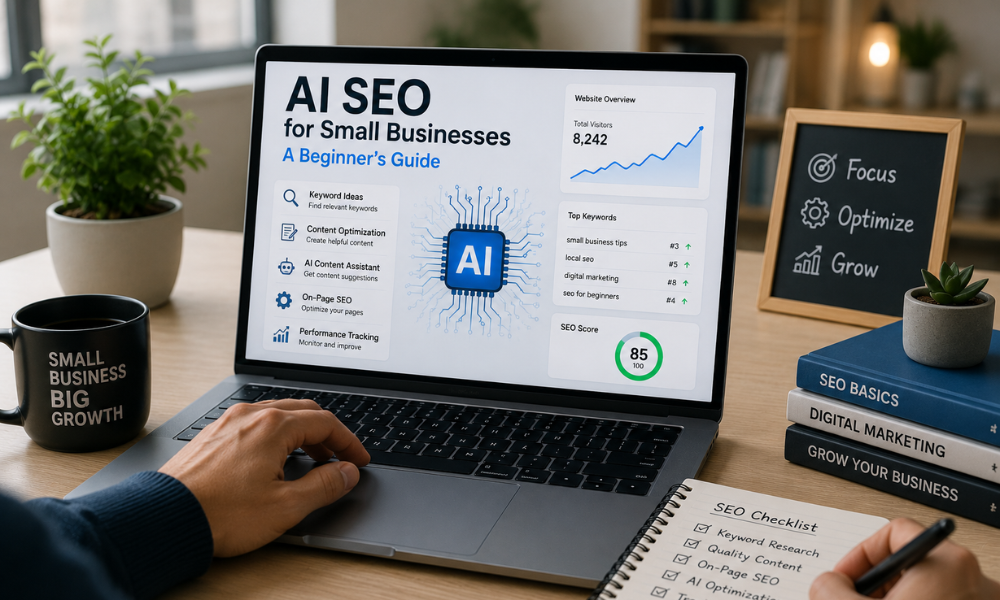
AI SEO for Small Businesses: A Beginner's Guide
AI-powered search is no longer just a topic for large corporations and tech companies. Small businesses are already appearing — or missing out — in AI Overviews, ChatGPT responses, and AI-driven local search results. The good news: you don't need a huge budget to start optimizing for AI search. You just need the right approach.
This beginner's guide breaks down AI SEO into simple, practical steps small business owners can start using today.
What Is AI SEO in Simple Terms?
AI SEO means optimizing your website and content so AI-powered search tools — like Google AI Overviews, ChatGPT, and Perplexity — can understand, trust, and recommend your business when people ask relevant questions.
Instead of just aiming for a spot on Google's page one, AI SEO aims to get your business mentioned directly inside AI-generated answers.
Why Small Businesses Should Care About AI SEO
- More customers are using AI tools to research products, services, and local businesses
- AI Overviews often appear before traditional search results, reducing clicks to unoptimized websites
- Being featured in an AI answer builds instant trust and credibility with potential customers
- Early adopters have a competitive advantage before AI SEO becomes standard practice
Step 1: Make Sure Your Website Basics Are Solid
Before focusing on AI-specific tactics, ensure your website has a strong foundation.
- Fast loading speed on both desktop and mobile
- Mobile-friendly, responsive design
- Clear navigation and simple site structure
- Secure website (HTTPS)
- No broken links or major technical errors
A technically healthy website is essential for both traditional and AI search visibility.
Step 2: Write Content That Answers Real Questions
Think about the exact questions your customers ask before choosing a business like yours.
- Create pages or blog posts that directly answer these questions
- Start with a clear, simple answer in the first few sentences
- Use everyday language your customers would actually use
- Avoid overly technical jargon unless your audience expects it
Example: Instead of just "Plumbing Services," create content answering "How much does a plumber cost for a leaking pipe repair?"
Step 3: Use Simple Headings and Short Paragraphs
AI tools and search engines both prefer content that's easy to scan and understand.
- Use clear H2 and H3 headings for each section
- Keep paragraphs short — 2 to 3 sentences is ideal
- Use bullet points for lists, steps, or features
- Add a short summary at the top or bottom of longer pages
Step 4: Optimize Your Google Business Profile
For local small businesses, this is one of the most important AI SEO steps.
- Claim and verify your Google Business Profile if you haven't already
- Fill in complete, accurate business details (hours, address, phone number)
- Add high-quality photos of your business, products, or services
- Encourage satisfied customers to leave genuine reviews
- Post regular updates about offers, services, or events
AI-powered local search increasingly pulls information directly from Google Business Profiles.
Step 5: Add an FAQ Section to Key Pages
FAQ sections are one of the easiest ways to improve AI search visibility for small businesses.
- List common questions customers ask about your products or services
- Write clear, concise answers for each question
- Use simple FAQ formatting so it's easy for both customers and AI tools to read
Step 6: Use Basic Structured Data (Schema Markup)
Schema markup might sound technical, but many website platforms make it simple to add.
- FAQ schema for your FAQ sections
- Organization schema with your business name, address, and contact details
- Review schema if you display customer testimonials
If you're using WordPress or similar platforms, many plugins can help add this automatically.
Step 7: Keep Your Business Information Consistent Everywhere
AI models build trust based on consistent information across the web.
- Use the exact same business name, address, and phone number everywhere (website, Google Business Profile, social media, directories)
- Update old or outdated listings with incorrect information
- Keep your website's "About" and "Contact" pages accurate and detailed
Step 8: Get Mentioned Beyond Your Own Website
- List your business in relevant local directories
- Ask satisfied customers to leave reviews on Google and industry-specific platforms
- Reach out for features in local news, blogs, or community websites
- Partner with other local businesses for cross-promotion and mentions
Step 9: Update Your Content Regularly
- Review your key pages every few months for accuracy
- Add new information, updated pricing, or fresh examples
- Remove outdated details that could confuse customers or AI tools
Step 10: Be Patient and Consistent
AI SEO results build over time, similar to traditional SEO. Consistency matters more than perfection.
- Focus on steady, small improvements rather than trying to do everything at once
- Track which pages perform well and expand on what works
- Stay open to learning as AI search continues to evolve
Simple AI SEO Checklist for Small Businesses
- [ ] Website loads quickly and works well on mobile
- [ ] Content answers real customer questions clearly
- [ ] Headings and paragraphs are short and scannable
- [ ] Google Business Profile is complete and updated
- [ ] FAQ sections added to key pages
- [ ] Basic schema markup implemented
- [ ] Business information is consistent everywhere online
- [ ] Active in relevant local directories and listings
- [ ] Content reviewed and updated regularly
Frequently Asked Questions :
No. Many AI SEO basics — like optimizing your Google Business Profile, writing clear content, and adding FAQs — can be done with time and effort rather than a large budget.
AI SEO builds on your existing SEO efforts by focusing on clearer content structure, consistent business information, and structured data, all aimed at helping AI tools understand and trust your business.
Small businesses often start seeing early improvements within 2-3 months of consistent effort, though full results can take longer depending on competition and industry.
Yes, especially for local businesses. AI-powered local search frequently references Google Business Profile data when answering location-based questions.
Many basic steps can be done independently, especially with website platforms that offer built-in SEO tools. However, working with an experienced professional can help accelerate results and avoid common mistakes.topic?